Research

For the full list of publications, see my Google Scholar. Most publications are available as preprints on arXiv.

Volume Dissipation for SBP Methods

For decades, numerical dissipation was employed in computational fluid dynamics primarily as a mechanism to stabilize a simulation. Following the development of entropy-stable schemes however, one can now develop provably robust methods without the inclusion of any numerical dissipation at all! Conventional wisdom may then lead one to assume that less volume dissipation leads to a more accurate numerical scheme. In this project we show the contrary, that even for provably nonlinearly stable schemes, the inclusion of volume dissipation can be beneficial for a variety of reasons, including the damping of unresolved modes, the damping of unphysical Jacobian eigenvalues, and assisting in positivity preservation. We construct volume dissipation operators compatible with a wide variety of SBP schemes, and discuss connections to upwind (flux-vector splitting) schemes.
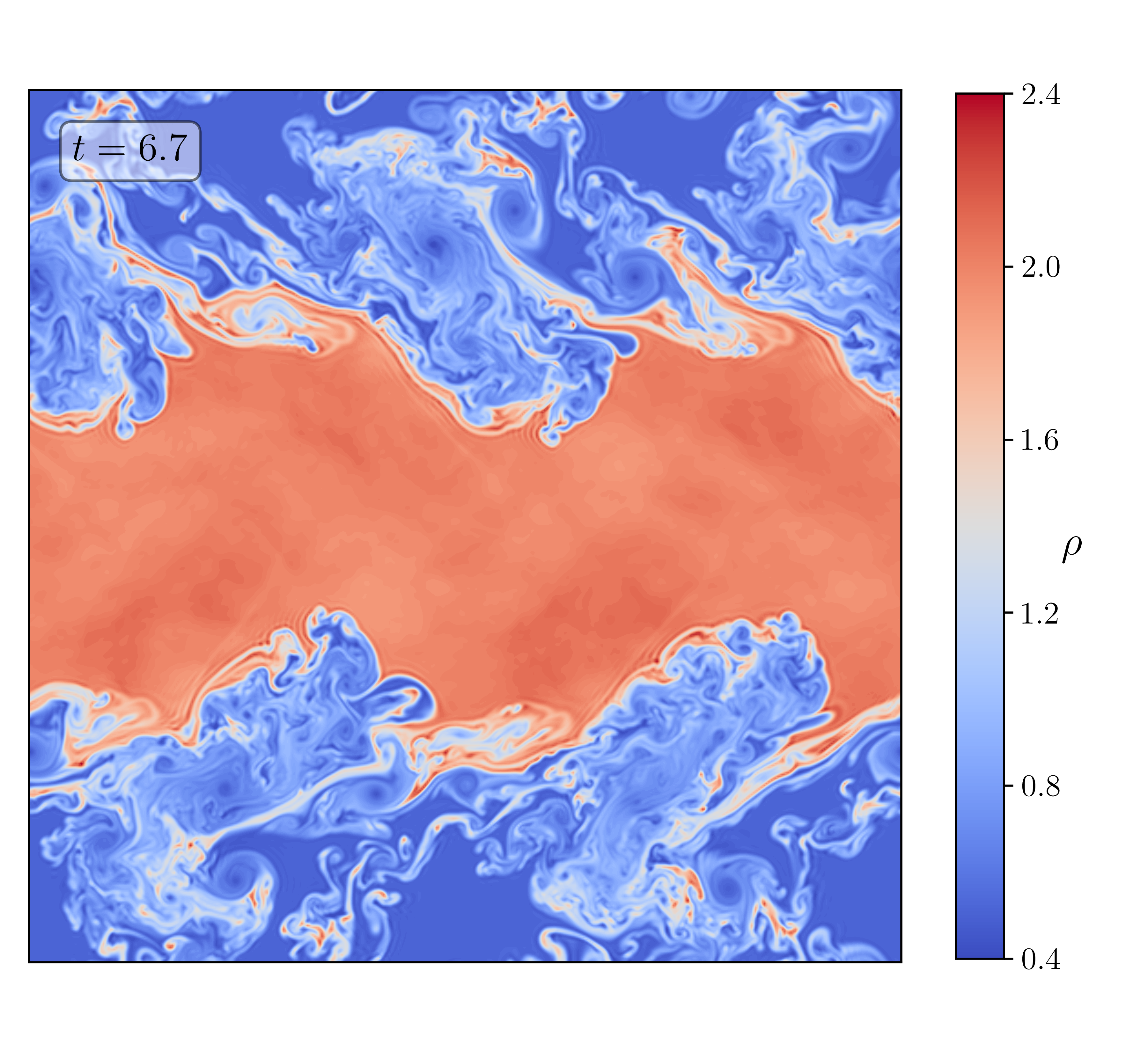
Kelvin-Helmholtz instability simulation

Local Linear Instabilities in Entropy-Stable Schemes

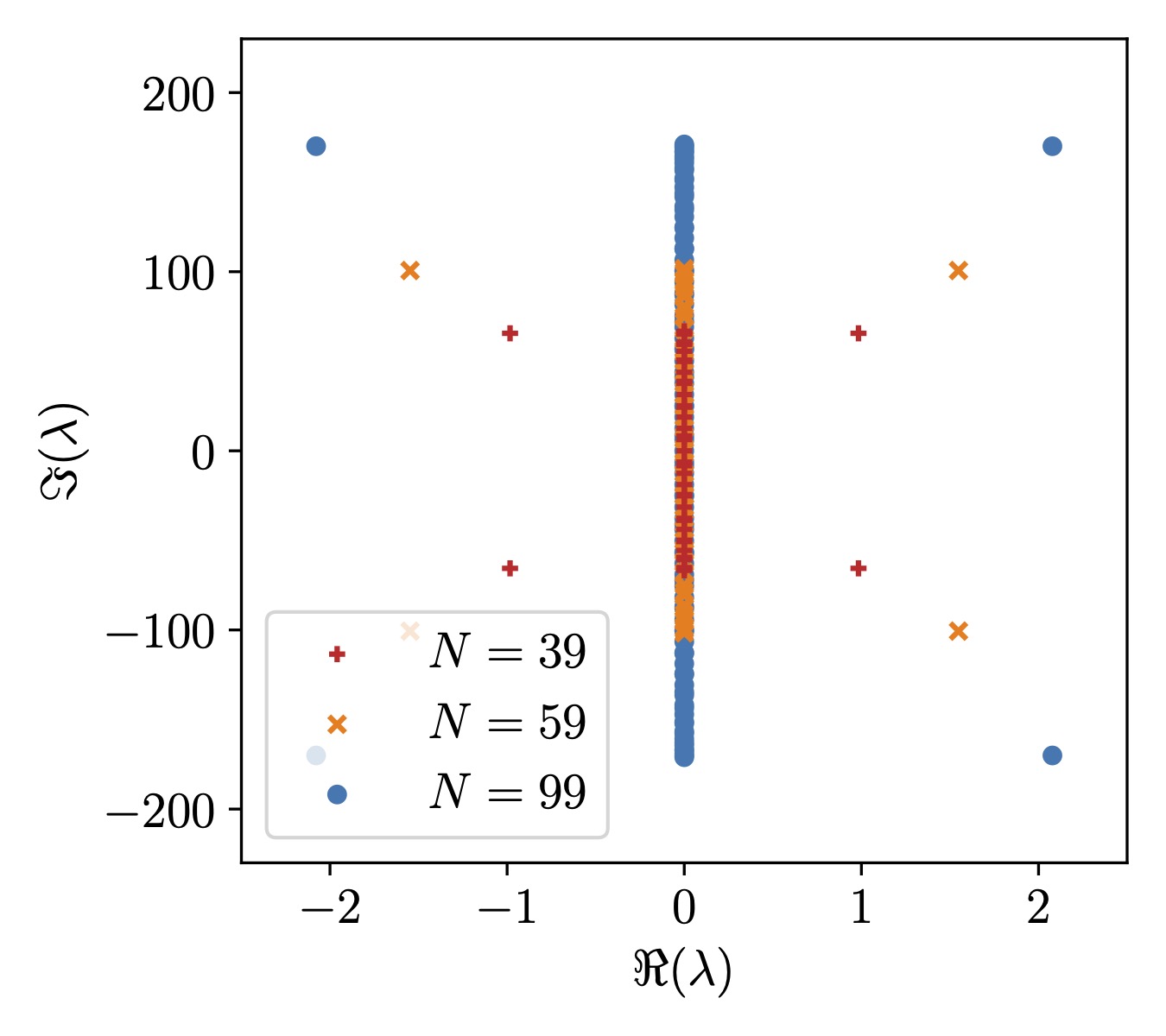
Concerns have been raised regarding the unphysical perturbation growth of entropy-stable schemes (see [Gassner, Svärd, & Hindenlang, 2022]). Although entropy-stable schemes satisfy nonlinear estimates consistent with the continuous problem, their linearizations may not. This has the potential to allow perturbations to grow in an unphysical manner, degrading the physical reliability of a simulation. In this work we analyze the practical impact of these linear instabilities, and determine that they do not pose a practical obstacle to the use of high-order entropy-stable methods. For a simple model problem we develop a sharp perturbation growth bound, then use Floquet analysis to demonstrate that unstable spectra of frozen linearized Jacobians do not necessarily lead to perturbation growth. We also discuss practical means of controlling any undesired perturbation growth, as well as poor near-vacuum behaviour of the logarithmic mean.

Floquet eigenvalue plot

SBP Schemes on Curvilinear Meshes

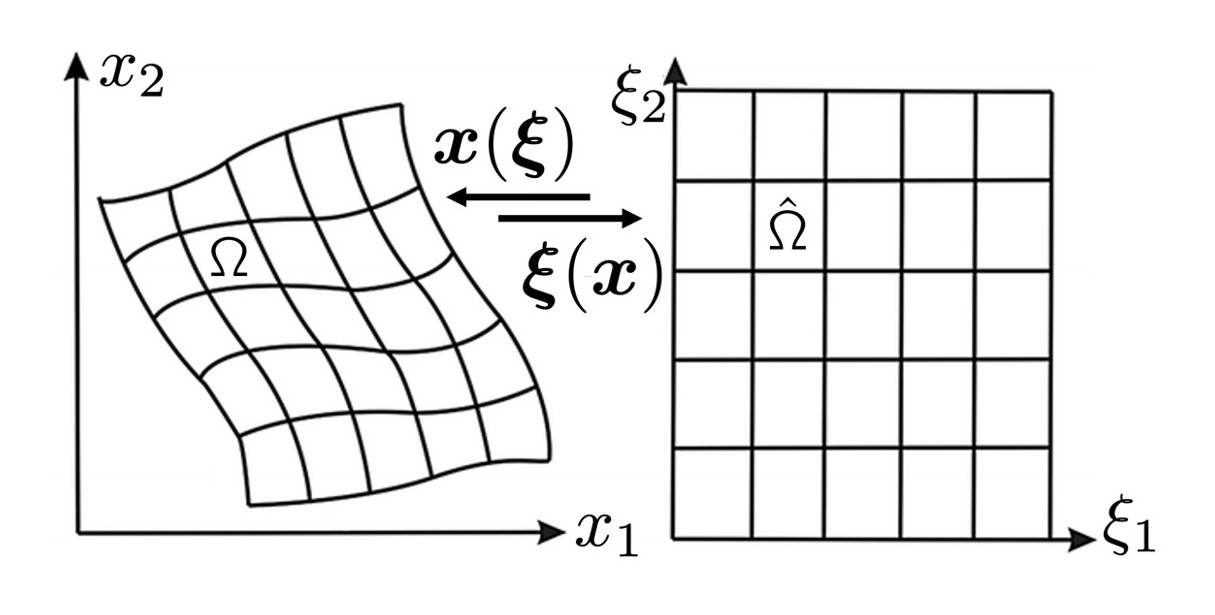
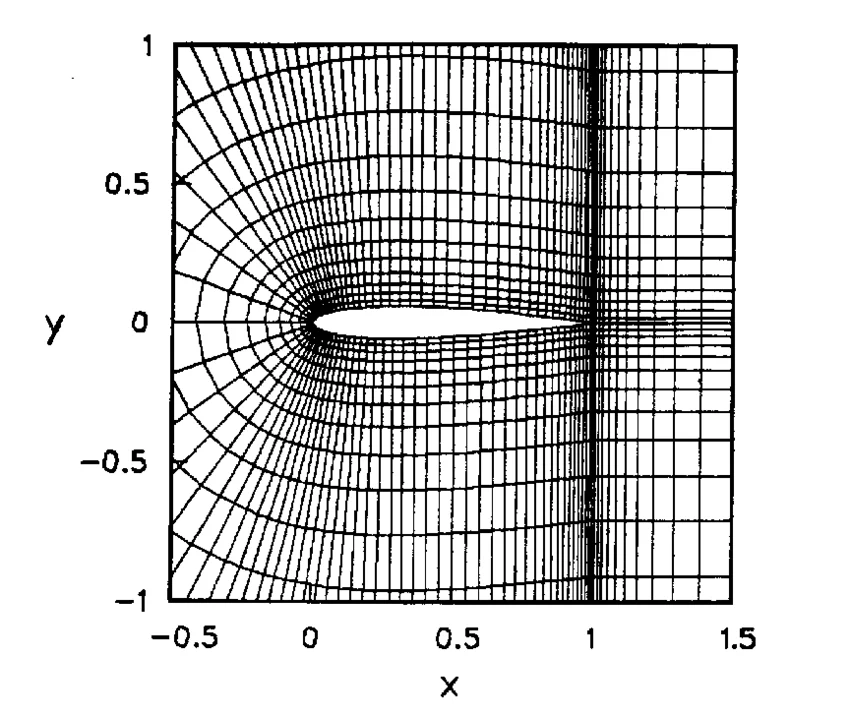
When mesh-based SBP methods are used to solve practical problems, curvilinear coordinate transformations are used to map between the reference element and the physical domain. In doing so, several geometric quantities must be computed, including the volume and surface metric terms, the boundary normals, and metric Jacobians. In this work we study and contrast the various existing methods computing such terms, and investigate their impact on the accuracy of the primal and dual problems through both theoretical analysis and extensive numerical experiments. We also develop a novel method for calculating optimized surface metrics suitable for use with non-polynomial mappings.

To be submitted soon...

Curvilinear mesh project image
C-mesh project image

SBP Operators for General Function Spaces

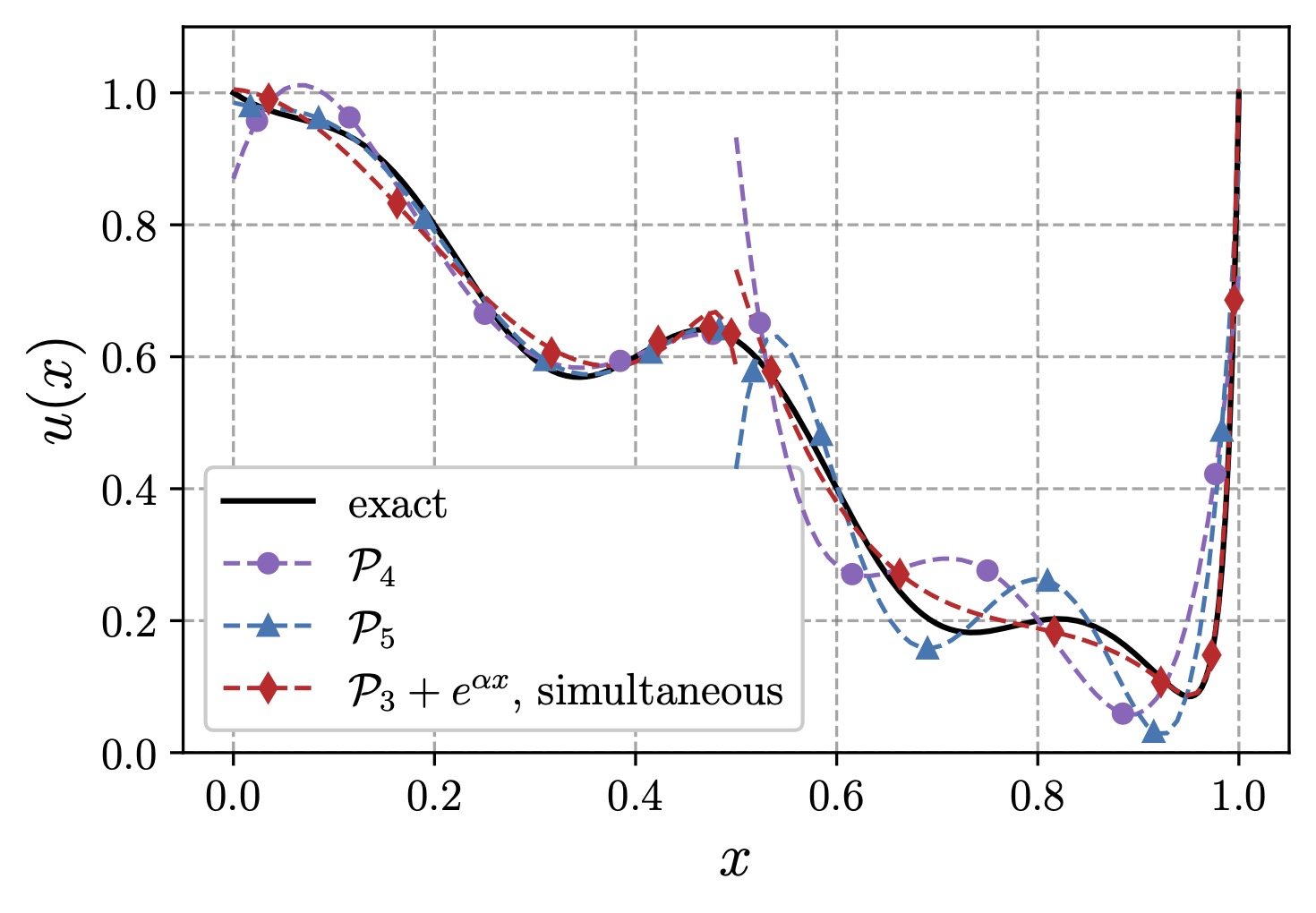
It is well known that polynomial-based operators struggle for practical problems involving singularities or high gradients, such as cracks in solid mechanics, or boundary layers in fluid mechanics. If some a priori knowledge of the solution is available, then a nonpolynomial basis can dramatically improve the accuracy of a numerical method by more accurately capturing these challenging features (without having to re-mesh!). This project constructs SBP operators for arbitrary bases with provably minimal degrees of freedom. We introduce an improved algorithm for the computation of generalized Gaussian quadratures, as well as an optimized operator construction procedure.

Exponential function space approximation